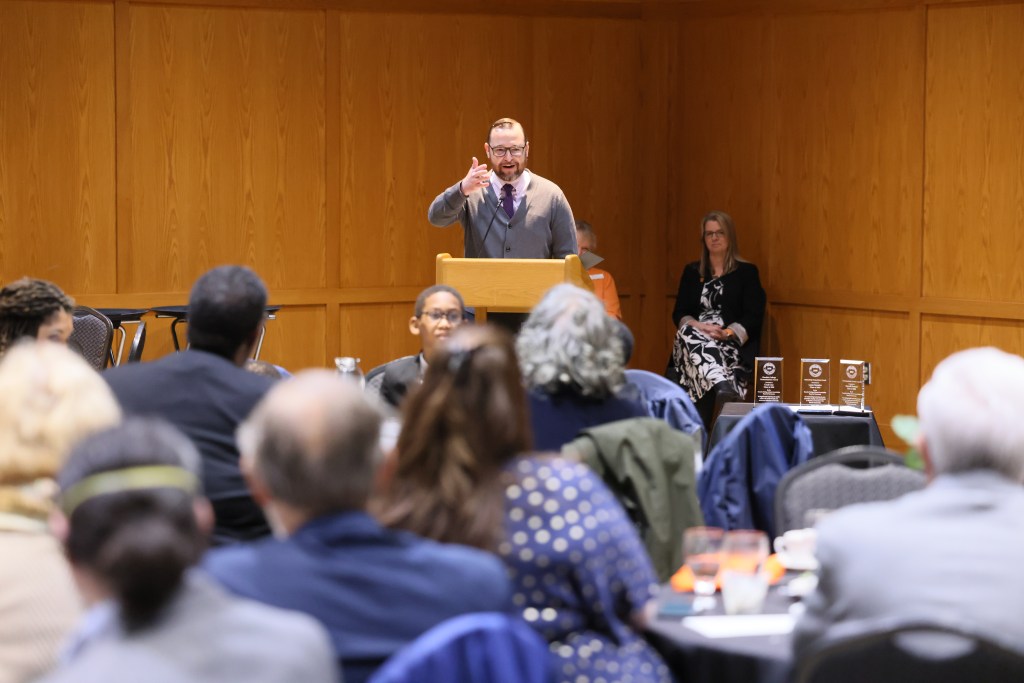
At Alumni Weekend back in April, the Hendrix College Alumni Association presented me with the Hendrix College Humanitarian Award. Given to “living alumni who have significantly improved the quality of life in the world through their service and dedication to humanity,” it’s one of the greatest honors I’ve ever received. Getting an award like this from my undergraduate alma mater, which has already given me so much, filled me with gratitude. I was so thankful to get the chance to express that gratitude in my acceptance speech. However, I was receiving this award in 2025, a year that, even in April, had already filled me with quite a few other emotions, such as anger, disappointment, and, more rarely but equally potent, hope. I tried my best to share all of those in my acceptance speech, which you can read in full below (minus a few adlibs and plus some pictures from that day). A full video from the event can also be viewed at the bottom of this post.
Thank you so much to Hendrix and the Alumni Association and to Anna Morshedi for nominating me for this award. To receive this particular award from this institution means more than I can say. There are so many people who are responsible for putting me here today, and I’m only going to have time to thank a few of them. First and foremost, I’d like to thank my family, especially my parents, Ken and Pam, and my wife, Rachel. I am a first-generation college student, and my parents did everything they could to make sure I could go to college and thrive when I got here. I met Rachel here at Hendrix in 2001, and we will celebrate our 20th wedding anniversary this summer. Since the day we met, no one has been more supportive of my life path and career decisions than Rachel, even when those decisions seemed a little crazy and even when she knew that my choices would cost us valuable time together.
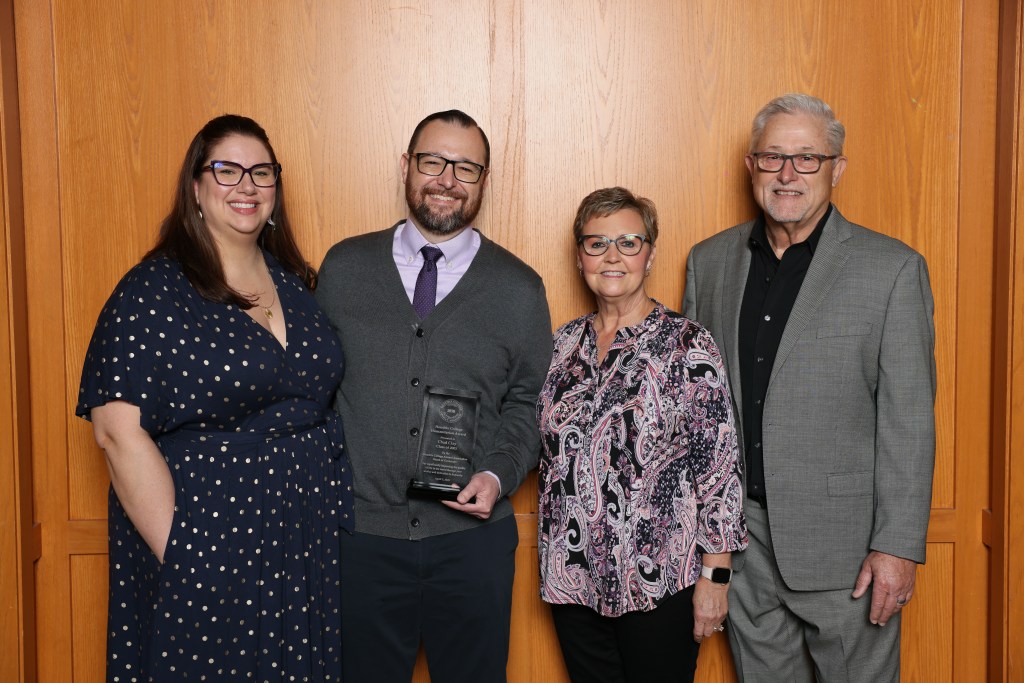
Second, I need to thank my many amazing teachers and professors throughout the years. All are deserving of individual thanks, but for today, I’ll try to focus on my extraordinarily good luck with people named David – my PhD advisor, David Cingranelli; my MA advisor, frequent bandmate, and constant co-author, David Richards; and, of course, Hendrix’s own David Larson. I hit the jackpot with Western Intellectual Traditions instructors in my first year, getting John Churchill in my first semester and Dr. Larson in my second. It was Dr. Larson’s classes that convinced me that I, a pre-med chemistry major, should try some other things and be a history minor. When I discovered medicine was not what I wanted to do with my life, it was Dr. Larson I met with to ask what it would be like to be an academic. To his credit, I’m pretty sure his advice started with “Don’t do it, but if you must…” Nevertheless, I’m not sure I would have had the courage to try so many new things and test the bounds of what I thought was possible were it not for Dr. Larson’s guidance. Thank you, Dr. Larson.

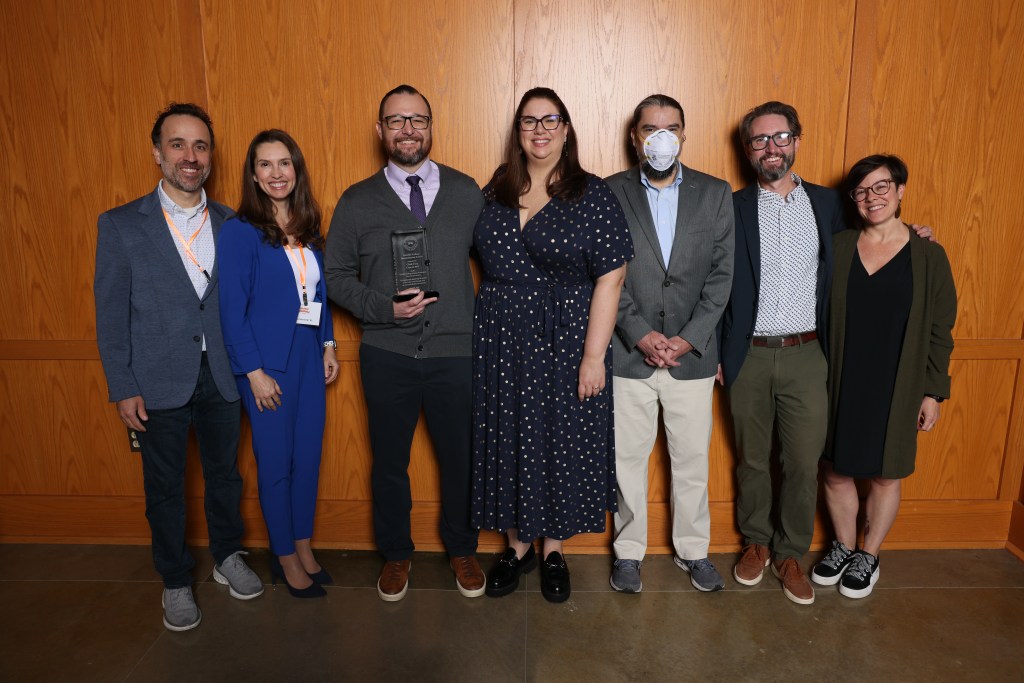
Third, I have been supported, encouraged, and inspired over and over again by an amazing group of friends. That includes a long list of graduate school and professional friends and co-authors, as well as personal friends I’ve made over the years, but today, I’ll just focus on my group of Hendrix friends who have been there for me for the better part of 25 years now, many of whom are sitting in this room today.
Finally are the institutions of higher ed that have shaped the way I see the world: the University of Memphis, where I received my MA; Binghamton University, where I received my PhD; and, most of all today, Hendrix College. I’ll never forget my astonishment when I visited Hendrix as a senior in high school. I simply didn’t know a place like Hendrix existed in Arkansas. As stated in its current mission statement, Hendrix is a place that values empathy, creativity, rigor, informed deliberation, diversity, inclusion, and justice. These values inspired me so much then and continue to guide my work today.
Sadly, these very same values are currently under sustained attack. In normal times, I probably wouldn’t bring up current events at a joyous occasion like this one, but these are NOT normal times. Don’t get me wrong – as someone who specializes in tracking the human rights performance of countries, I can say that the United States has never been the paragon of human rights that it often pretends to be. We largely don’t participate in the international human rights regime, and our practices rate, on average, as the worst among high-income democracies worldwide. This is non-partisan; our poor comparison to the rest of our peers has held true whichever party has been in the White House. However, rather than responding to these failures by trying to improve our performance on human rights practices and, by extension, improving people’s everyday lives, our government is currently doing the opposite. Rather than increasing freedom of expression for all, people are being arrested and threatened with deportation for their political speech. Rather than embracing diversity and attempting to reduce discrimination, the government is actively punishing attempts to overcome institutionalized racism, sexism, transphobia, xenophobia, and homophobia. Rather than ensuring people enjoy their right to vote, our government is making it more difficult for people to have their voices heard at the polls. And rather than helping future generations live up to Hendrix’s values of informed deliberation and rigorous inquiry, our government is doing what it can to dismantle public support for higher education and scholarly inquiry.
Speaking from personal experience, I would never have come to Hendrix, nor enjoyed the career I’ve had, if it weren’t for several different types of public support for higher education. When I was still in Junior High, my parents and I set our sights on the Arkansas Distinguished Governor’s Scholarship as the mechanism by which I would pay for college. At the time, that scholarship covered tuition, fees, room, and board at any college in the state, and it indeed paid most of my costs at Hendrix. It was in my senior year here that the scholarship began to be rolled back by the state. The program still exists, but it covers a much smaller amount than it once did. After Hendrix, I attended and worked for public institutions. Much of my time and research as a graduate student at the University of Memphis and Binghamton University was funded by research grants from a federal government agency, the National Science Foundation, and when grant funding didn’t cover everything, I received funding via research assistantships from those state-funded institutions. When I finally got a job as a professor, I went to work for another state-funded institution, the University of Georgia, and while there, my research again received support from the National Science Foundation.

But now higher ed, and the public sources of funding that support it, are under attack by the government. My story alone exemplifies what we stand to lose if an attack like this were to succeed. I almost certainly would neither have attended college, nor engaged in human rights research if there weren’t public resources supporting higher ed. Public support for higher education serves as a ladder for first-gen students like me to gain access to a better life and more opportunities to engage with a wide range of knowledge. Without them, chances for advancement will dwindle, and our country’s knowledge base and innovation will stagnate.
So, what do we do about it? I won’t pretend to have all of the answers, but I do have a few pieces of advice. First, you can’t do everything, so it is important to find your lane, that is, find where you can best contribute, and do what you can. Trying to respond to everything that is happening is the road to burnout and madness, but if we all find our own unique ways of pushing back in our areas of specialty, we can make a difference. Second, organize and act in solidarity with those working in other areas. We don’t have to do everything if we support others doing the work we can’t, and collective action will always work better than acting alone. Third, even if you think they disagree with you, make sure your elected officials hear from you about what they are doing and what they should be doing, and if they don’t listen, make sure they hear it from you at protests and the ballot box. And finally, and maybe most importantly for this room, remember Hendrix’s values and try to live them in your everyday life. I believe the lessons we learned here will serve us well in seeing those values become reality outside of this campus. All of this is true for fighting the current onslaught, and it will remain true if we succeed. It won’t be enough to go back to the way things were before. We’ve got to be better.
So, let’s all enjoy our time back here with one another at our alma mater. Let’s enjoy seeing our friends and family, and really enjoy this time back in this very special place. And then let’s go back out there and get to work. Again, thank you so much for this incredible honor. I will continue doing everything I can to be worthy of it.
You can watch video of the whole event below. My section begins around 16:15, but the whole thing is worth watching, including insightful comments from Hendrix’s President, Dr. Karen K. Petersen, and fantastic acceptance speeches from the winners of the other awards, including my fellow member of the Class of 2003 and recipient of the Distinguished Alumni Award, Dr. Harvell Howard.
You can also view more pictures from the event at Hendrix’s Flickr album or using the gallery linked to that album below.

*This content represents the opinions of the author. It carries no endorsement of the University of Georgia. All photos courtesy of Hendrix College.*
 Human Rights Person
Leave a comment